Curtains play a big role in Australian homes. They control light, help regulate indoor temperatures, and protect privacy. Over time, however, dust, moisture, cooking fumes, and sunlight can wear them down faster than many homeowners expect.
From humid coastal areas to dry inland regions, Australian conditions are tough on curtain fabrics. Without proper care, curtains can fade, develop odours, or trap allergens that affect indoor air quality.
Maintaining your curtains correctly helps them last longer, look better, and perform as they should. At Aussie Home Improvement, we often see curtains replaced unnecessarily simply because regular care was overlooked. This guide explains how to clean and maintain your curtains safely and effectively in Australian homes.
Know Your Curtain Fabric Before Cleaning
Not all curtains are the same, and cleaning them without understanding the fabric can lead to permanent damage.
Common Curtain Fabrics in Australia
Many modern homes use polyester or blended fabrics because they are durable and low maintenance. Cotton and linen curtains are popular in warmer climates but can shrink if washed incorrectly. Sheer curtains are delicate and easily damaged by rough handling, while blockout and thermal curtains often have bonded linings that require extra care.
Always check the care label if available. If there is no label, treat the curtains as delicate and avoid machine washing unless you are confident it is safe.
Step-by-Step Curtain Cleaning Guide
Regular light cleaning is far better than infrequent deep cleaning. This approach reduces fabric stress and keeps dust and allergens under control.
Step 1: Remove Dust Regularly
Dust builds up quickly on curtains, especially in dry or windy areas.
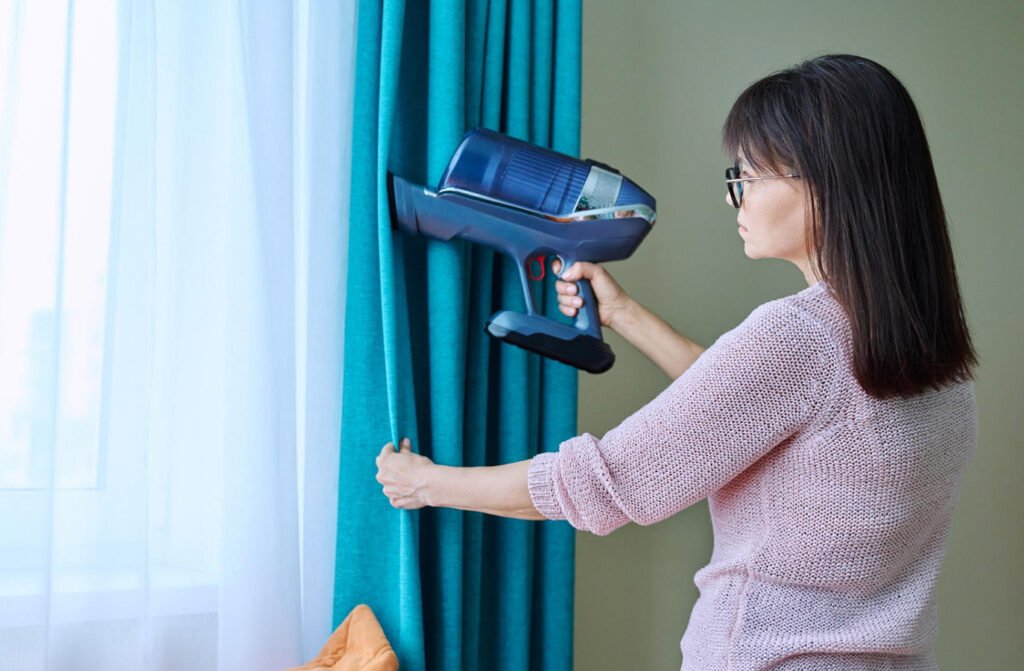
Use a vacuum cleaner with a soft brush attachment every few weeks. Start at the top and work downward so dust does not resettle. This is particularly important for homes near roads, construction sites, or bushland.
Step 2: Deal With Small Marks Early
Small stains are much easier to remove when fresh.
Use a mild detergent mixed with cold water and gently dab the area with a clean cloth. Avoid scrubbing, as this can damage fibres or spread the stain. Always test a hidden section first.
Step 3: Washing Curtains at Home
Some curtains can be washed at home if handled carefully.
Remove hooks and tracks before washing. Use a gentle cycle with cold water and a mild detergent. Avoid overloading the washing machine, as heavy wet curtains can stretch and lose shape.
Step 4: Hand Washing Delicate Curtains
Sheer curtains and lined fabrics are usually safer with hand washing.
Soak them briefly in cold water with a small amount of gentle detergent. Rinse thoroughly and avoid wringing or twisting the fabric. Let excess water drip away naturally.
Step 5: Drying and Rehanging Correctly
Drying is where many curtains get damaged.
Avoid tumble drying unless the label specifically allows it. Rehang curtains while they are slightly damp so they dry in shape. Keep them out of direct sunlight during drying to prevent fading, especially in summer.
How Australian Conditions Affect Curtain Care
Australia’s climate plays a major role in how often curtains need attention.
In humid areas like Brisbane and Sydney, poor airflow can lead to mould or musty smells. Regular airing and light cleaning help prevent this. In coastal homes, salt in the air can weaken fabric fibres, making more frequent cleaning necessary. In hot, sunny regions such as Perth, UV exposure can fade curtains quickly if they are not protected.
Using blinds, awnings, or UV-filtering window films can significantly extend curtain life.
DIY Curtain Care vs Professional Cleaning
What Most Homeowners Can Do Themselves
Routine vacuuming, spot cleaning, and gentle washing are manageable for most homeowners. Lightweight polyester curtains and basic sheers usually respond well to careful DIY cleaning.
When Professional Cleaning Is the Better Option
Heavy blockout curtains, thermal linings, silk, or older fabrics are best left to professionals. These materials can shrink, delaminate, or lose structure if cleaned incorrectly. Professional services are also safer for double-storey homes or large windows where access is difficult.
Safety should always come first, especially when ladders or heavy curtain tracks are involved.
Common Curtain Care Mistakes to Avoid
Many curtain issues come from avoidable errors.
Washing curtains in hot water is a common cause of shrinkage. Using strong detergents can weaken fibres and strip colour. Skipping regular dusting allows grime to embed deeply, making cleaning harder later. Hanging curtains back while dripping wet can stretch hems and distort the fabric.
Avoiding these mistakes can add years to your curtains’ lifespan.
Long-Term Curtain Maintenance Tips
Good habits make a noticeable difference over time.
Rotate curtain panels occasionally so the same section is not always exposed to sunlight. Ensure rooms are well ventilated, especially in winter when condensation builds up. Clean curtains more frequently if you have pets or live in dusty or coastal areas.
At Aussie Home Improvement, we recommend checking your curtains at the change of each season. A quick inspection and light clean can prevent bigger problems later.
Conclusion
Maintaining your curtains does not need to be complicated or time-consuming. With regular dust removal, gentle cleaning, and an understanding of how Australian conditions affect fabric, curtains can stay fresh and functional for many years.
Proper care not only improves the look of your home but also supports better indoor air quality and comfort. By following these simple curtain care tips, Australian homeowners can protect their investment and avoid unnecessary replacement costs.
FAQ:
How often should curtains be cleaned?
Most curtains should be vacuumed monthly and washed or professionally cleaned every 6 to 12 months. Homes in dusty, humid, or coastal areas may need more frequent cleaning.
Can I machine wash sheer curtains?
Some sheer curtains can be machine washed on a gentle cycle, but many are safer to hand wash. Always use cold water and mild detergent.
Why do my curtains smell musty?
Musty smells usually come from moisture and poor airflow. Regular cleaning and better ventilation usually solve the issue.
Do curtains help with insulation?
Yes. Properly fitted curtains can reduce heat loss in winter and heat gain in summer, especially blockout or thermal styles.
When should curtains be replaced instead of cleaned?
If curtains are badly sun-damaged, brittle, or permanently discoloured, replacement may be more practical than cleaning.