Upgrading to LED lighting installation is one of the smartest improvements Australian homeowners can make. Whether you live in a brick veneer home in Melbourne, a Queenslander in Brisbane, or a coastal property in Perth, switching to LED lighting delivers immediate energy savings and long-term value.
With rising electricity prices across Australia, more households are replacing halogen and incandescent lights with modern LED systems. The savings are real, the lighting quality is better, and the maintenance is lower.
In this guide, Aussie Home Improvement explains the benefits of LED lighting, what installation costs in Australia, and how much you can realistically save on your power bills.
Why More Australians Are Choosing LED Lighting
Traditional lighting wastes a large portion of electricity as heat. This is especially noticeable during Australian summers, where excess heat from halogen downlights can increase cooling costs.
LED lights, on the other hand, are designed to be energy efficient, durable, and safe for Australian conditions.
Energy Efficiency and Lower Power Bills
LED lights use up to 80 to 90 percent less electricity than traditional incandescent globes and around 50 percent less than halogen lights.
For example:
- A 50W halogen downlight can be replaced with a 7W to 10W LED downlight.
- A 60W incandescent globe can be replaced with a 9W LED.
If your home has 20 halogen downlights running for four hours per day, switching to LED can reduce lighting energy consumption by hundreds of dollars per year.
In states like NSW and Victoria where electricity prices are higher, the savings are even more noticeable.
Longer Lifespan
LED globes typically last between 15,000 and 50,000 hours. Compared to halogen lights that often last 2,000 hours, this means far fewer replacements.
In hard-to-reach areas such as high ceilings or stairwells, this makes a major difference in maintenance costs and convenience.
Cooler and Safer for Australian Homes
Heat build-up from halogen lights has been linked to ceiling damage and, in some cases, fire risk. This is particularly relevant in older fibro homes or properties with insulation installed over downlights.
LEDs generate far less heat, making them safer and more suitable for modern insulated ceilings.
Better Light Quality
Modern LED lighting offers:
- Warm white for living areas
- Cool white for kitchens and laundries
- Daylight for garages and workshops
Dimmable and smart LED options are also widely available, giving homeowners greater control over brightness and mood.
Types of LED Lighting for Australian Homes
When planning a home lighting upgrade, it helps to understand your options.
LED Downlights Installation
This is the most common upgrade in Australian homes. LED downlights provide a clean, modern look and are ideal for open-plan living areas.
They are popular in:
- Sydney apartments
- Melbourne renovations
- Brisbane new builds
- Perth modern homes
LED Batten Lights
Often used in garages, sheds, and laundries, LED battens are practical and highly efficient.
LED Strip Lighting
Perfect for under-cabinet kitchen lighting, staircases, and outdoor entertaining areas.
Outdoor LED Lighting
Designed for Australian weather conditions, outdoor LEDs are built to withstand:
- Heavy rain
- Coastal salt air
- Extreme heat
- Frost in southern states
How Much Does LED Lighting Installation Cost in Australia?
The cost of LED lighting installation depends on the number of lights, the type of fittings, and whether new wiring is required.
Average LED Lighting Cost Australia
| Service | Average Cost (AUD) |
| LED globe replacement (per globe) | $10 – $30 |
| LED downlight supply only | $15 – $50 per unit |
| Electrician installation (per downlight) | $60 – $120 |
| Full home LED upgrade (20–30 lights) | $1,500 – $3,500 |
| Smart LED installation | $100 – $200 per fitting |
Prices vary depending on your location. Sydney and Melbourne labour rates are typically higher than regional areas.
If you are replacing halogen downlights with LED, costs may be lower if wiring is already compatible. However, older homes may require a licensed electrical LED installation to ensure safety and compliance with Australian standards.
How Much Can You Save with LED Energy Savings?
Let’s look at a simple example.
A home with 25 halogen downlights (50W each) running four hours per day uses:
50W x 25 lights x 4 hours = 5,000W per day or 5kWh per day
At an average electricity rate of 30 cents per kWh, that’s:
$1.50 per day or around $550 per year
Switching to 10W LED lights:
10W x 25 x 4 hours = 1kWh per day
That’s about $110 per year.
Estimated annual savings: approximately $440
Over 10 years, that’s more than $4,000 in electricity savings, not including reduced replacement costs.
In hotter climates like Perth and Brisbane, reduced heat output from LEDs can also slightly lower air conditioning use, increasing savings further.
Government Rebates and Energy Schemes
Some Australian states offer energy efficiency schemes that reduce the cost of replacing halogen lights with LED.
For example:
- NSW Energy Savings Scheme
- Victorian Energy Upgrades program
These programs sometimes provide discounted or even free LED upgrades through approved providers.
It is worth checking what is currently available in your state before booking installation.
Choosing the Right LED Lighting for Your Home
Not all LEDs are equal. When selecting products, look for:
- Australian compliance certification
- Suitable IP rating for bathrooms or outdoor use
- Dimmable compatibility if required
- Correct colour temperature
Warm white (around 3000K) suits living spaces, while cool white (4000K) works well in kitchens and work areas.
At Aussie Home Improvement, we always recommend balancing functionality with comfort. Lighting should feel natural and enhance your home, not make it feel clinical.
DIY vs Professional LED Installation
DIY LED Replacement
You can replace simple plug-in globes yourself if no wiring changes are required. This is suitable for:
- Standard screw-in globes
- Table lamps
- Some batten fittings
However, Australian electrical laws are strict.
Professional Electrician LED Installation
A licensed electrician is required for:
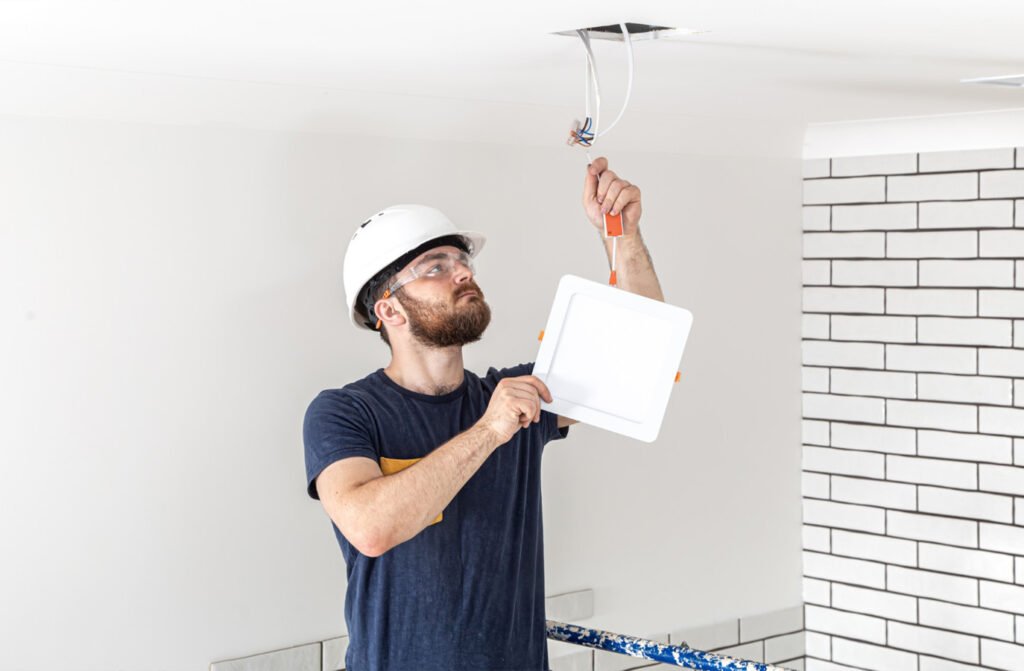
- Installing new downlights
- Replacing hardwired fittings
- Modifying wiring
- Installing dimmer switches
- Smart lighting systems
Professional installation ensures compliance with Australian Standards and reduces fire and safety risks.
For most LED downlights installation projects, hiring an electrician is the safest and most reliable option.
Is LED Lighting Installation Worth It?
For most Australian homes, the answer is yes.
The upfront cost is quickly offset by:
- Lower electricity bills
- Reduced maintenance
- Increased property appeal
- Improved lighting quality
If you are renovating, building, or simply tired of replacing blown halogens, upgrading to energy efficient lighting is one of the highest return improvements you can make.
As we often highlight at Aussie Home Improvement, small upgrades can deliver big long-term savings.
Cost Guide Summary
| Upgrade Type | Estimated Total Cost | Estimated Annual Savings |
| Replace 10 halogens with LED | $800 – $1,500 | $150 – $250 |
| Replace 25 halogens with LED | $1,500 – $3,500 | $400 – $500 |
| Full home smart LED system | $3,000 – $6,000 | $400 – $700 |
Savings depend on usage patterns and electricity rates.
FAQs
1. How long does LED lighting installation take?
Most standard homes can be upgraded in one day. Larger properties or smart systems may take longer.
2. Can I replace halogen downlights with LED myself?
In most cases, no. Hardwired lighting must be installed by a licensed electrician in Australia.
3. Do LED lights work well in hot Australian climates?
Yes. LEDs perform well in high temperatures and produce far less heat than halogens.
4. Are LED lights worth it for older homes?
Absolutely. They improve safety, reduce heat build-up, and lower energy bills, particularly in older fibro or weatherboard homes.
5. What colour LED light is best for living rooms?
Warm white (around 3000K) is generally best for living areas as it creates a comfortable and inviting feel.